
Discovering the sweet and tangy taste of the serviceberry opened my eyes to the delights of the wild. Birds benefit from the shelter and food they provide, and I was surprised by the fruit’s culinary potential. It won’t be long before the foliage turns deep red in autumn reminding us that summer is gone and winter snow covers the bare branches as they await spring’s arrival.
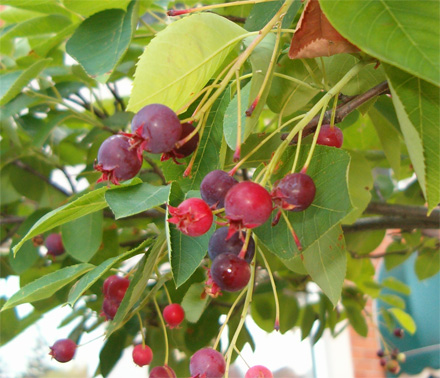 In July, friends and I went on our first serviceberry-picking excursion. Nature was in full swing. The water was alive with colonies of swarming tadpoles. Sounds of bullfrogs filled the air while a great blue heron perched across the way. Nearby fishermen were anticipating a bite. With a pruner and bucket in hand, we nibbled, talked and picked a half bushel as a passersby looked on with a curious gaze. Later at home, I prepared homemade pancake batter and scooped in a cup of serviceberries. Unlike blueberries, the fruit seems to melt into the batter, adding its sweet and tangy flavor. I paired the meal with scrambled eggs and orange juice. After one bite, my family instantly became serviceberry fans. The fruit resembles blueberries but serviceberries are smaller with a tangier taste. Tasty eaten raw, they can be preserved to make jam, muffins and pies. Like blueberries, the deep purple, small fruits have loads of anthocyanins and other antioxidants.
During my 2006 treekeeper class, Jim DeHorn, Treekeeper Organizer from Openlands, first introduced me to the serviceberry tree. In the same class, on a tree identification walk I had the rare opportunity to join the late Dr. George Ware, dendrologist emeritus from the Morton Arboretum. His memorable comment, “I would like to see more people plant small trees,” left an impression. The serviceberry is on my top five list of favorite small trees. Gardeners should explore the possibility of planting them in a natural landscape, a fruit orchard or as prominent specimens.
Serviceberry Pancakes
Recipe: Homemade Serviceberry Pancakes
Ingredients
1 cup flour
2 teaspoons baking powder
1 teaspoon baking soda
1 teaspoon cinnamon
1 cup milk
1 egg
1 tablespoon cooking oil
1 teaspoon vanilla
1 cup serviceberry fruit
Directions
Mix dry ingredients and wet ingredients separately. Then mix all ingredients together.
Cook in lightly oiled frying pan and serve with syrup of your choice. Maple and
lingonberry syrups are my personal favorites.


